

Checkups, scans and tests during pregnancy
8-minute read
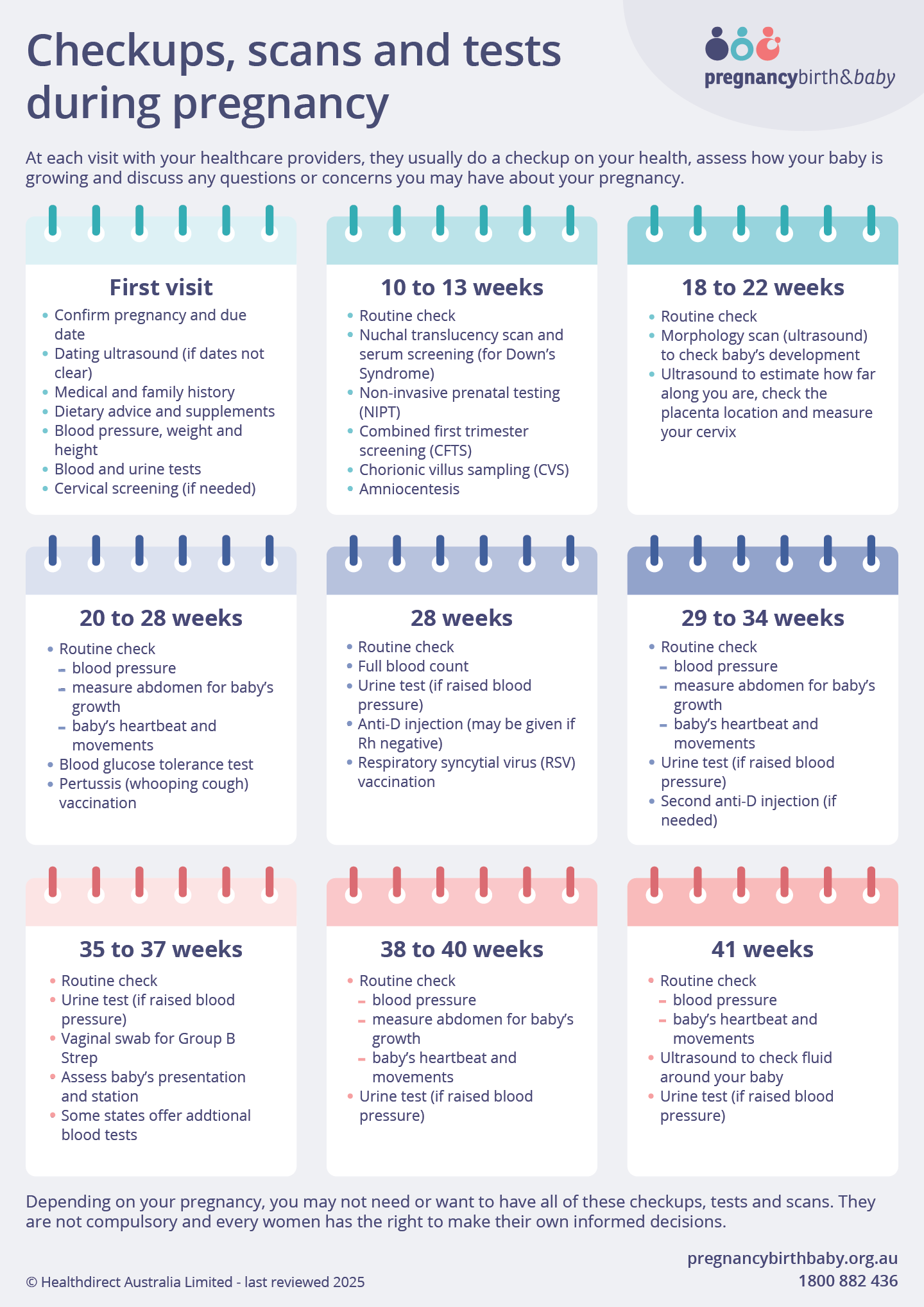
View text version of infographic
Checkups, scans and tests during pregnancy
At each visit with your healthcare providers, they usually do a checkup on your health, assess how your baby is growing and discuss any questions or concerns you may have about your pregnancy.
First visit
- Confirm pregnancy and due date
- Dating ultrasound (if dates not clear)
- Medical and family history
- Dietary advice and supplements
- Blood pressure, weight and height
- Blood and urine tests
- Cervical screening (if needed)
10 to 13 weeks
- Routine check
- Nuchal translucency scan and serum screening (for Down’s Syndrome)
- Non-invasive prenatal testing (NIPT)
- Combined first trimester screening (CFTS)
- Chorionic villus sampling (CVS)
- Amniocentesis
18 to 22 weeks
- Routine check
- Morphology scan (ultrasound) to check baby’s development
- Ultrasound to estimate how far along you are, check the placenta location and measure your cervix
20 to 28 weeks
- Routine check:
- blood pressure
- measure abdomen for baby’s growth
- baby’s heartbeat and movements
- Blood glucose tolerance test
- Pertussis (whooping cough) vaccination
28 weeks
- Routine check
- Full blood count
- Urine test (if raised blood pressure)
- Anti-D injection (may be given if Rh negative)
- Respiratory syncytial virus (RSV) vaccination
29 to 34 weeks
- Routine check:
- blood pressure
- measure abdomen for baby’s growth
- baby’s heartbeat and movements
- Urine test (if raised blood pressure)
- Second anti-D injection (if needed)
35 to 37 weeks
- Routine check
- Urine test (if raised blood pressure)
- Vaginal swab for Group B Strep
- Assess baby’s presentation and station
- Some states offer addtional blood tests
38 to 40 weeks
- Routine check:
- blood pressure
- measure abdomen for baby’s growth
- baby’s heartbeat and movements
- Urine test (if raised blood pressure)
41 weeks
- Routine check:
- blood pressure
- baby’s heartbeat and movements
- Ultrasound to check fluid around your baby
- Urine test (if raised blood pressure)
Depending on your pregnancy, you may not need or want to have all of these checkups, tests and scans. They are not compulsory and every women has the right to make their own informed decisions.
Want more like this?
See more guides and infographics from Pregnancy, Birth and Baby.
PDF format PDF format PDF formatLearn more here about the development and quality assurance of healthdirect content.
Last reviewed: August 2025