

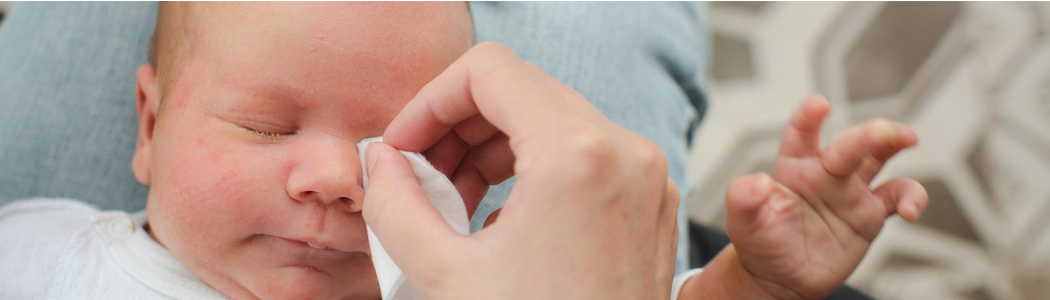
Cleaning your baby's ears, eyes and nose
6-minute read
Key facts
- Cleaning your baby's skin is important for their health and helps prevent problems in the future.
- Babies' skin is sensitive and can become easily irritated.
- Clean your baby's ears, eyes and nose with warm water and a soft washcloth or cotton wool.
- Gently wipe your baby's eyes from the inside corner to the outside corner, using a new cotton ball for each eye.
- It's important not to stick anything into your baby's ears, eyes or nose — this can cause damage.
Why should I clean my baby's ears, eyes and nose?
Your baby's skin is still developing in the first few months of life. It's quite fragile, sensitive and can become easily irritated.
Cleaning your baby's ears, eyes and nose helps keep them healthy. Just like adults, babies can have:
- earwax in their ears
- mucus in their nose
- discharge in their eyes
This is normal and there's no need to worry. Gently cleaning these areas can help prevent problems later on.
When should I clean my baby's ears, eyes and nose?
You should clean your baby's ears, eyes and nose every day. All you need is cotton wool or a soft cloth and warm water. It's best not to use soap as it can dry out or irritate your baby's skin.
A good time to clean your baby's ears, eyes and nose is just before a bath. Newborns don't need a bath every day, so you can find a time that works for you. Try to make daily cleaning part of your routine.
Some babies get upset when you wash their face. Try cleaning them when they're calm — not when they're hungry or right after a feed. Talking or singing while you clean them may help soothe your baby and make the experience more enjoyable for both of you.
How do I clean my baby's ears, eyes and nose?
Dip some cotton wool or a soft cloth in lukewarm water. Squeeze the cotton wool so water doesn't drip into your baby's ears, eyes or nose.
Gently clean the corners of their eyes, wiping from the inside corner to the outside. Use a new piece of cotton wool or clean part of the cloth for each eye.
Wipe around each nostril to remove any mucus. Gently clean around your baby's ears, including behind their ears.
Use a soft towel to dry your baby's skin. Make sure you also dry behind their ears.
Never stick anything into your baby's ears or nose. This can damage their eardrum or the inside of their nose, and may cause a nosebleed or increase the risk of infection. It may even lead to permanent hearing loss.
What is normal to see when I clean my baby's ears, eyes and nose?
It is normal for babies to have earwax in their ears, discharge in their eyes or mucus in their nose.
They might get a runny nose if they have a cold. You may notice discharge in and around their eyes when they wake up.
These fluids are similar to those in adults, but because their skin is more sensitive, it is important to clean these areas gently.
Should I remove my baby's earwax?
Most of the time, you don't need to remove your baby's earwax. It helps protect their ears by trapping germs, dirt and dust.
Earwax usually moves to the open end of the ear on its own. You can gently wipe it away with a damp cloth when you are cleaning your baby's ears.
Don't insert cotton buds, fingers or pointed objects into your baby's ears. Avoid using any home remedies for earwax removal. These can damage the ear canal or affect your baby's hearing.
When should I take my child to see a doctor?
If your baby has a very watery eye with sticky discharge, it might be caused by a blocked tear duct. This usually gets better by itself by the time your baby turns one. Watering eyes can also be a sign of something more serious, so it's best to check with your doctor or child health nurse.
If your child is sensitive to bright light and has a watery eye, see a doctor immediately.
Take your baby to your doctor or child health nurse if they:
- pull or tug at their ears
- have unusual or more discharge coming from the ears
- seem to be in pain when you touch their ears
These may be signs of an ear infection. Babies with ear pain or ear infections may be irritable and may also have symptoms like a runny nose or sore throat.
If you're worried about your baby's ears, eyes or nose, speak with your doctor or child health nurse.
Resources and support
The Royal Children's Hospital Melbourne has health information on:
The Centre for Eye Research Australia has information on how you can protect your child's vision.
Sydney Children's Hospitals Network offers information about ear problems in children.
The National Health and Medical Research Council has a fact sheet about eye discharge.
Information for Aboriginal and/or Torres Strait Islander peoples
Care for Kids' Ears has resources about ear health for parents and carers of Aboriginal and/or Torres Strait Islander children.

Speak to a maternal child health nurse
Call Pregnancy, Birth and Baby to speak to a maternal child health nurse on 1800 882 436 or video call. Available 7am to midnight (AET), 7 days a week.
Learn more here about the development and quality assurance of healthdirect content.
Last reviewed: July 2025