

How to increase breastmilk supply
11-minute read
Key Facts
- Breastmilk is produced naturally in the glands within the breasts — milk production starts before your baby is born.
- Not having enough breastmilk supply can affect your baby's growth and development.
- There are many reasons why your breastmilk supply may be low.
- If you think that you have a low milk supply, speak to your doctor or lactation consultant for advice.
- The best way to increase your milk supply is to breastfeed your baby more often.
How do my breasts make breastmilk?
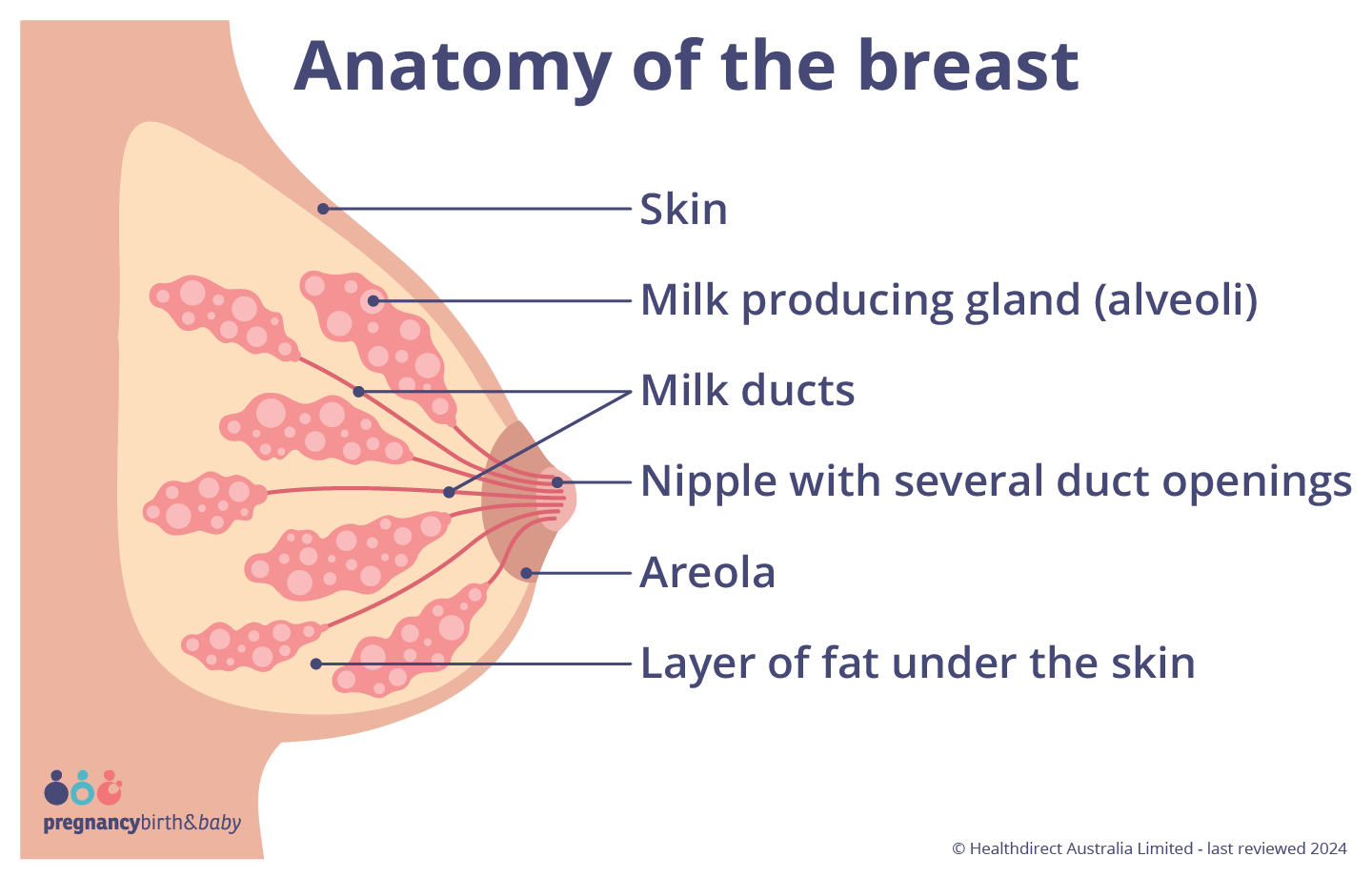
Milk is produced in clusters of sacs within the glands of your breasts.
Your breasts start producing milk before you give birth.
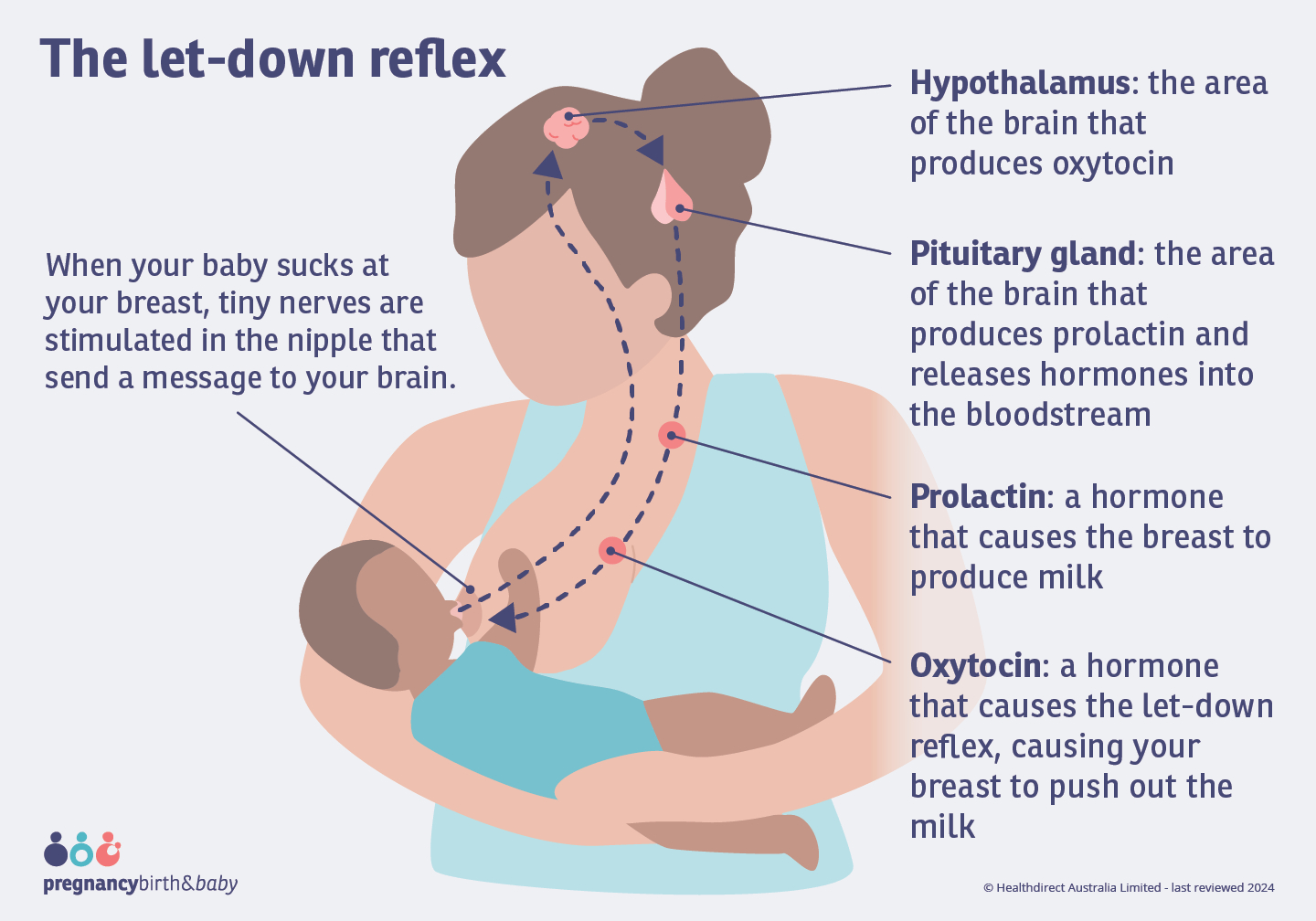
The milk is carried through ducts to your nipple where the milk flows out of tiny openings. This process is called the let-down reflex.
How much milk do my breasts produce?
There are many factors that influence how much breastmilk you produce, including:
- how often you breastfeed
- how well your baby removes milk from your breasts
- your general health and wellbeing
Supply and demand
Generally, the amount of milk your breasts produce (supply) depends on how much your infant drinks (demand).
This means that the more milk that is removed from the breast, the more milk is made.
If less milk is removed from your breast, your body will make less.
Expressing milk from your breast can also increase your supply.
What can I do to establish healthy breastmilk supply?
Usually, your body makes enough milk to meet your baby's needs. The best way to establish a healthy supply of breastmilk is to:
- start breastfeeding very soon after your baby is born
- breastfeed your baby often
- make sure your baby is latching on correctly
What are some causes of a low milk supply?
There are many reasons why you may have low milk supply.
Some things that can affect your milk supply include if you:
- take certain medicines, such as an oral contraceptive pill that contains oestrogen
- have had breast or nipple surgery
- combine formula feeding with breastfeeding
- skip breastfeeds without expressing milk
- restrict breastfeeding to set times each day, rather than when your baby is hungry (feeding on demand)
- use dummies or nipple shields over a long term
- smoke
Your milk supply may be lower if breastfeeding was delayed after your baby was born. This can happen if your baby needed to stay in a special care nursery.
If your baby has trouble attaching to your breast, this can also affect your milk supply. This can happen if:
- you have flat or inverted nipples
- your baby has a tongue or lip tie
- your baby is sleepy because of jaundice
Your milk supply may be lower if you were unwell or had a difficult experience during or after your baby was born. This includes if you:
- had a complicated or long labour
- had a caesarean section
- had mastitis
- had retained placental tissue
- lost a large amount of blood during birth
Some medical conditions can impact your milk supply, such as:
When is milk supply considered low?
Low milk supply is when you are not producing enough milk to meet your baby's normal growth and development needs.
If you think you have a low milk supply, talk to your:
Low supply is usually a temporary situation. With breastfeeding support, it can improve.
What is normal behaviour for a breastfeeding baby?
It is useful to know what is 'normal' for your baby. This can help you spot when they are behaving differently, which can happen due to a low milk supply. If you have any questions, you can speak to your doctor or lactation consultant.
When breastfeeding, your baby will start with short sucks. When your milk starts to flow, your baby will change to longer, slower sucks. It is normal for your baby to pause sucking while feeding.
Your baby will want to be fed quite often. This is because their body digests breast milk quickly. There may be times when they want to feed even more often. This includes if they are having a growth spurt, or if the weather is hot.
Your baby may want to feed a lot at certain times of the day. This is known as 'cluster feeding'. It often happens in the afternoon and early evening. It is normal if your baby wants to keep feeding at these times. It does not mean that you have low milk supply.
Your baby will get better at breastfeeding over time. At first, they will make small sucks and not take in much milk. As they learn, they will make longer sucks and take in more milk. Their feeds will get shorter as they grow.
It's normal for your baby to want cuddles and skin-to-skin contact. This can help them feel comfortable and secure. It can also encourage them to feed.
Every baby is different. Some will breastfeed quickly, and others will take longer. As your baby gets older, they will breastfeed less.
What is normal for me, if I am breastfeeding?
Breastfeeding is different for everyone. The following signs are usually normal.
- Your breasts may seem softer as your milk supply adjusts to your baby's needs.
- Your breasts may not leak milk, stop leaking or only leak a little.
- You may not feel when your 'let-down' reflex happens and milk comes from your breast.
- You may not be able to pump very much with a breast pump — your baby will always get more out than a breast pump
- If you express using a breast pump, you can express less milk over time.
These signs do not usually mean that you have a low supply.
How do I know that my baby is getting enough milk?
Always look at the 'whole' picture to ensure that your baby's growth and development is within normal limits.
Your newborn baby is getting enough breastmilk if they:
- have 8 to 12 breastfeeds in 24 hours
- have 6 to 8 wet nappies in a 24-hour period — nappies should be wet with pale urine (wee) that does not smell, and should include some dirty (poo) nappies
- pass soft yellow stools (poos) — stools may sometimes be green or orange
- wake for feeds by themselves
- settle and sleep fairly well after most feeds
- are back to birth weight in about 2 weeks after birth
- gain about 150g or more every week for the first 3 months
If you have any concerns, you can speak to your doctor or child health nurse.
How can I increase my breastmilk supply?
The main way to increase breastmilk supply is through breastfeeding or expressing milk more often than you currently do.
Here are some tips to increase your breastmilk supply:
- Ensure that your baby is attached to your breast and feeding well — check that they are sucking and swallowing.
- Be prepared to feed your baby more often — breastfeed on demand at least 8 times in 24 hours.
- Offer your baby another feed before you go to bed — this can also help you both sleep.
- Breastfeed using both breasts, one at a time — try to offer each breast more than once.
- Express for a few minutes after breastfeeding — this will help remove more milk from your breasts and encourage your body to make more.
- While breastfeeding, compress your breast — this will help your milk to flow.
- Breastfeed your baby to soothe them — do this instead of using other comforts like a dummy.
It is also very important to look after yourself. Make sure you are:
- drinking enough water
- eating a healthy balanced diet and not missing any meals
- resting as much as possible between breastfeeds
You can also talk to your doctor or lactation consultant about a supply line. A supply line is a tube. One end is placed in a bottle of formula or breast milk, and the other end is taped to your nipple. When your baby breastfeeds, the supply line gives them more milk. This means they will breastfeed for longer and stimulate your breasts to make more milk.
There are also substances that can increase your milk supply. These are known as galactagogues. They include some:
- herbal treatments
- foods
- medicines
Some cultures use food or herbs to increase breastmilk supply. Many of these have not been studied to check that they are safe or effective. Ask your midwife for advice.
Domperidone is a prescription medicine that can increase the hormone prolactin. This hormone stimulates your breastmilk production. If your doctor prescribes domperidone you also need to continue breastfeeding or expressing breastmilk at least 8 times in 24 hours.
You can talk to your doctor or lactation consultant about how you can increase your breastmilk supply. They can work with you to choose options that suit you best. It's important to understand your options. Be sure to ask questions about their benefits and any risks.
Resources and support
If you think you have a low milk supply, you can:
- call the Australian Breastfeeding Association's National Breastfeeding Helpline on 1800 686 268.
- contact a trained specialist advice through Karitane's virtual breastfeeding clinic, or call their careline on 1300 227 464.
- visit the Royal Women's Hospital website for more information on low milk supply and other breastfeeding problems.
FIND A HEALTH SERVICE — The Service Finder can help you find doctors, pharmacies, hospitals and other health services.

Speak to a maternal child health nurse
Call Pregnancy, Birth and Baby to speak to a maternal child health nurse on 1800 882 436 or video call. Available 7am to midnight (AET), 7 days a week.
Learn more here about the development and quality assurance of healthdirect content.
Last reviewed: October 2025